

| Platform | Plan |
|---|---|
| Shopify | Start, Pro, & Guru |
| Salla | Pro, & Guru |
| Non-Platform | Growth & Enterprise |
Segmenting customers is the first step toward making your marketing efforts more effective. By targeting customers based on similar behaviors and spending habits, you can create personalized campaigns and build stronger customer loyalty. In this article, learn how Gameball automatically segments customers using the RFM model. RFM customer segmentation focuses on purchasing behavior rather than demographic or psychographic data. This model allows you to identify high-value customers and tailor your retention and engagement strategies accordingly.
What Is RFM?
RFM stands for Recency, Frequency, and Monetary Value — a data-driven segmentation technique based on:| Dimension | Definition |
|---|---|
| Recency | When the customer last made a purchase from your store |
| Frequency | How often the customer makes purchases |
| Monetary Value | The amount of money the customer spends |
What Is an RFM Analysis?
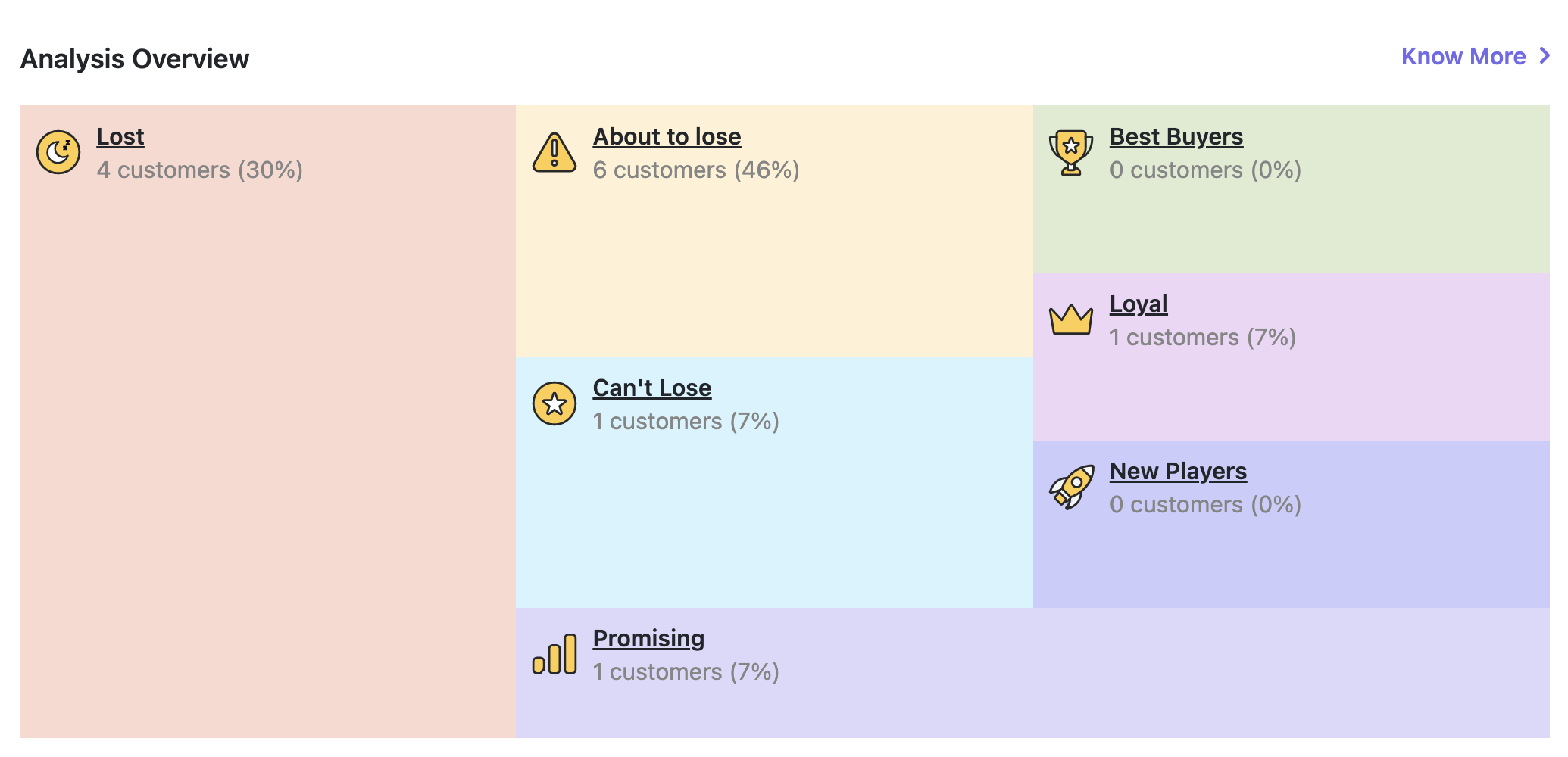
To conduct an RFM analysis, you assign scores to customers based on their recency, frequency, and monetary value. These scores, when combined, categorize customers into actionable segments.With Gameball, there is no need to manually assign scores or build these segments yourself. Gameball performs the RFM analysis for you and automatically creates seven pre-defined customer segments.
Gameball’s RFM Segments
The following segments are created automatically by Gameball based on RFM data:| Segment | Description |
|---|---|
| Best Buyers | Customers with the highest purchase frequency, most recent activity, and highest spend. |
| Loyal | Customers with high recency and monetary value who purchase frequently. |
| New Customers | Customers who have just joined your store. |
| Promising | Customers who are moderately active, make occasional purchases, and respond to promotions. |
| Can’t Lose | Customers who previously made large purchases but have not returned in a long time. |
| About to Lose | Inactive customers with low frequency and low spend. |
| Lost | Customers with the lowest scores in recency, frequency, and monetary value. |
Understanding a Customer’s RFM Score
You can view the exact R, F, and M values behind any customer’s segment assignment, along with a plain-language explanation of why they were placed in that segment. This explainability helps you:- Understand what drove a customer into a specific segment
- Spot customers who are close to moving into a higher-value segment
- Make more informed decisions about who to target and how

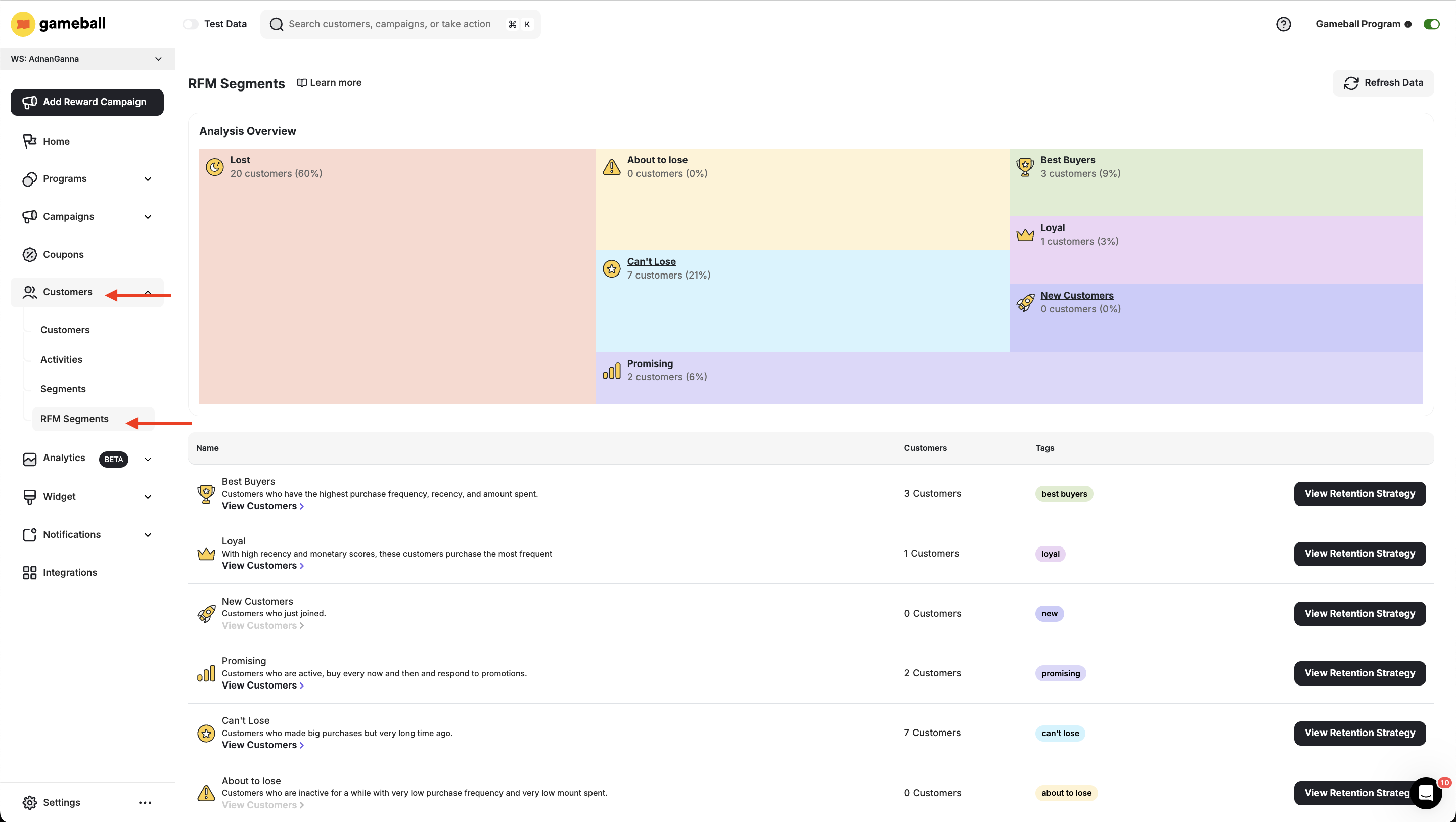
Where to Find RFM Segments on Gameball
Related Articles
Using RFM Segments to Serve Your Goals
Learn how to use RFM segments to retain, engage, and grow customer loyalty.
Introduction to Segmentation
Understand how dynamic segmentation works in Gameball.