

Plan Availability
- Shopify & Salla
- Non-Platform
| Plan | Available |
|---|---|
| Pro & Guru | Yes |
| Milestone | Add-on |
Campaign Types
Stamp Campaigns
Stamp Campaigns
A Stamp campaign rewards customers when they complete a specific action repeatedly within a set timeframe without interruption.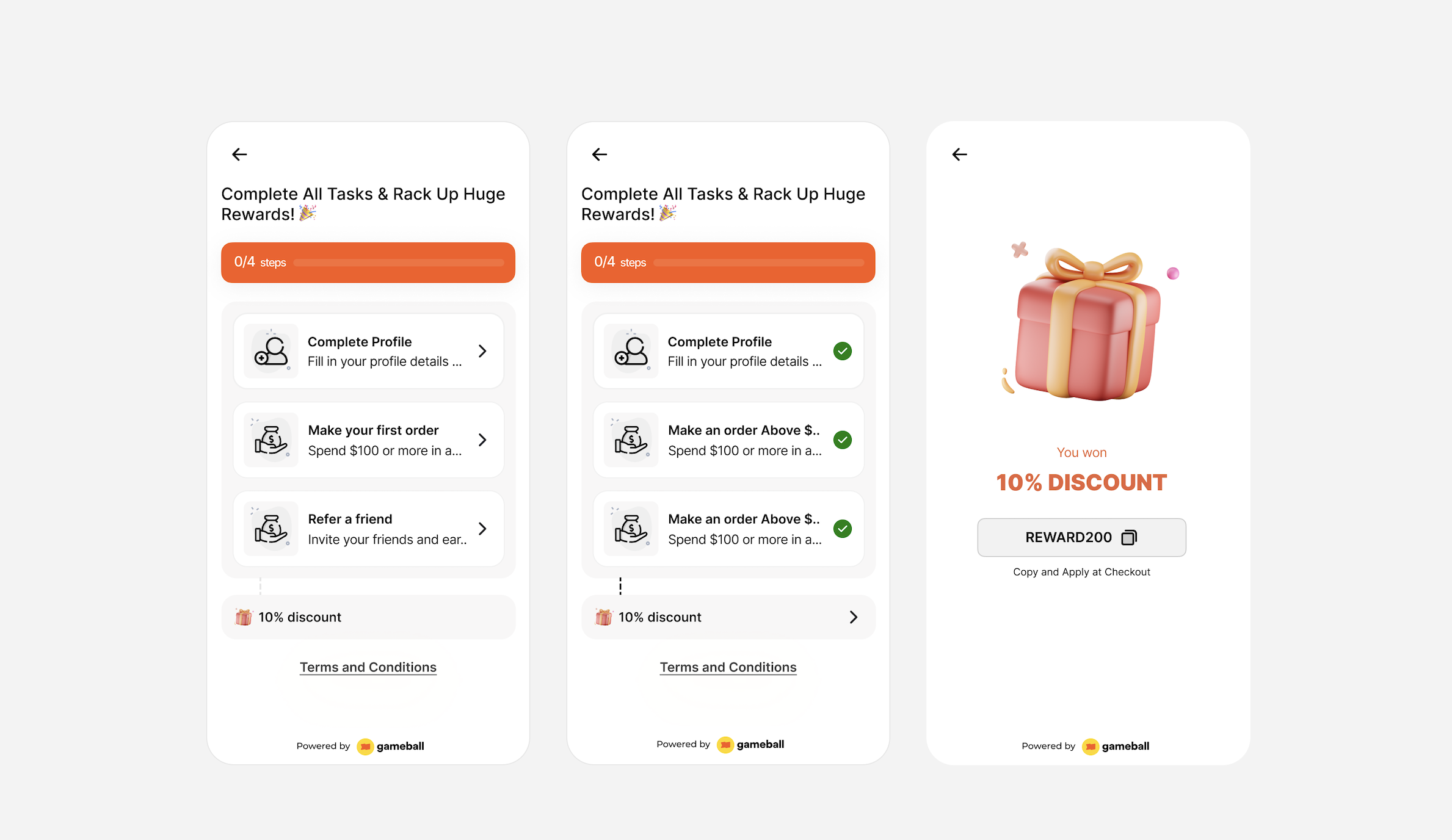
- How it works: Customers must perform the same action a number of times over a defined period (for example, logging in 7 times within 10 days) or (for example, completing 5 purchases or referring 3 friends within the next month). If they do not log in that many times within 10 days, they will not be rewarded.
- Objective: To encourage consistency and regular engagement with your brand.
- Best use cases:
- Daily check-ins or app logins
- Regular purchases
- Maintaining weekly activity
Milestone Campaigns
Milestone Campaigns
A Milestone campaign rewards customers after they reach a specific achievement point or threshold.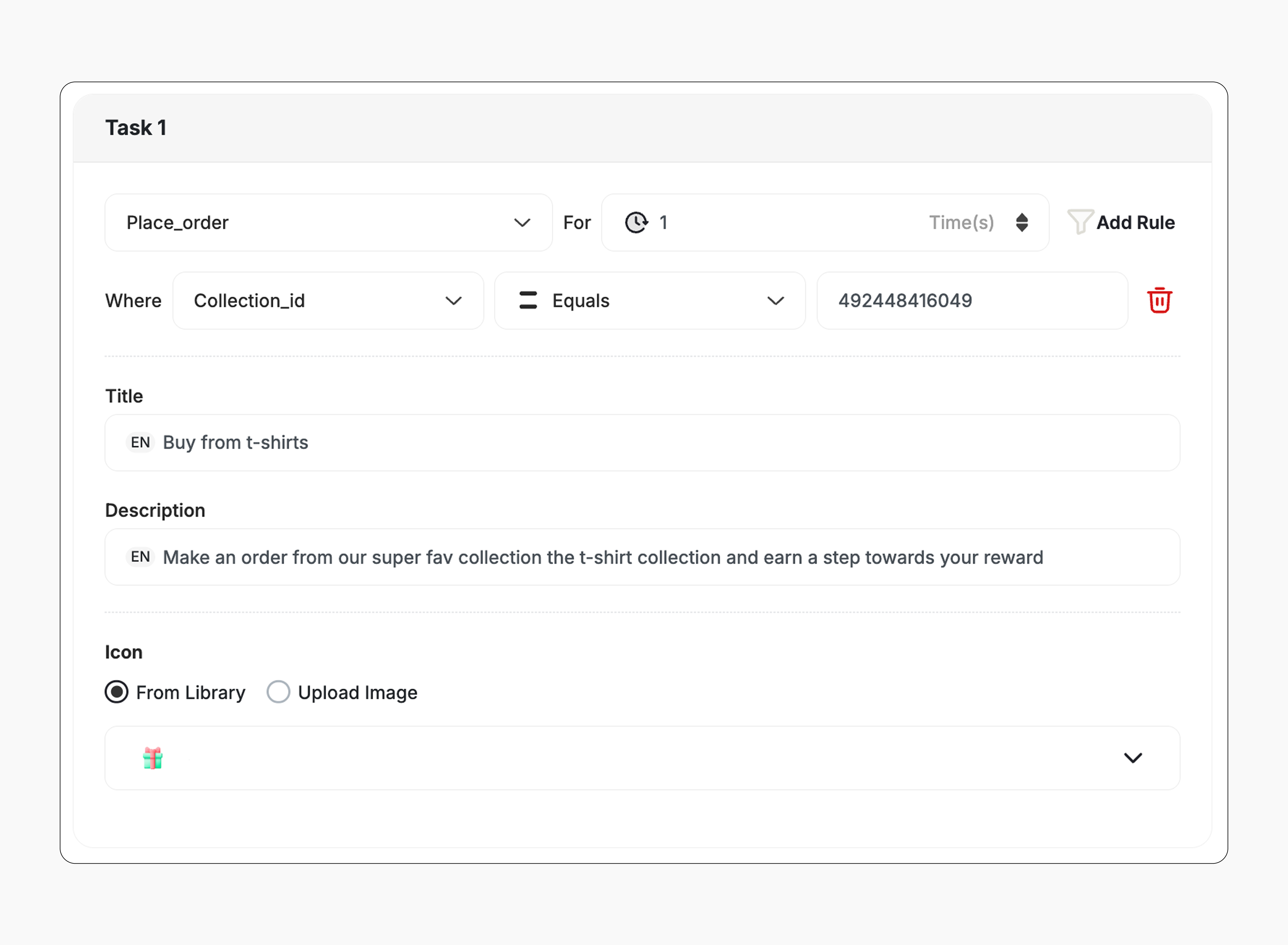
- How it works: Customers perform an action repeatedly until they hit a predefined target (For example, reach a specific amount of spendings, or completing 10 orders). Unlike streaks, milestones do not require consecutive actions.
- Objective: To motivate customers to achieve larger goals over time.
- Best use cases:
- Accumulated purchases
- Total referrals
- Reaching a spending target
Mission Campaigns
Mission Campaigns
A Mission campaign is a more flexible type of campaign that allows you to combine different actions into one reward journey.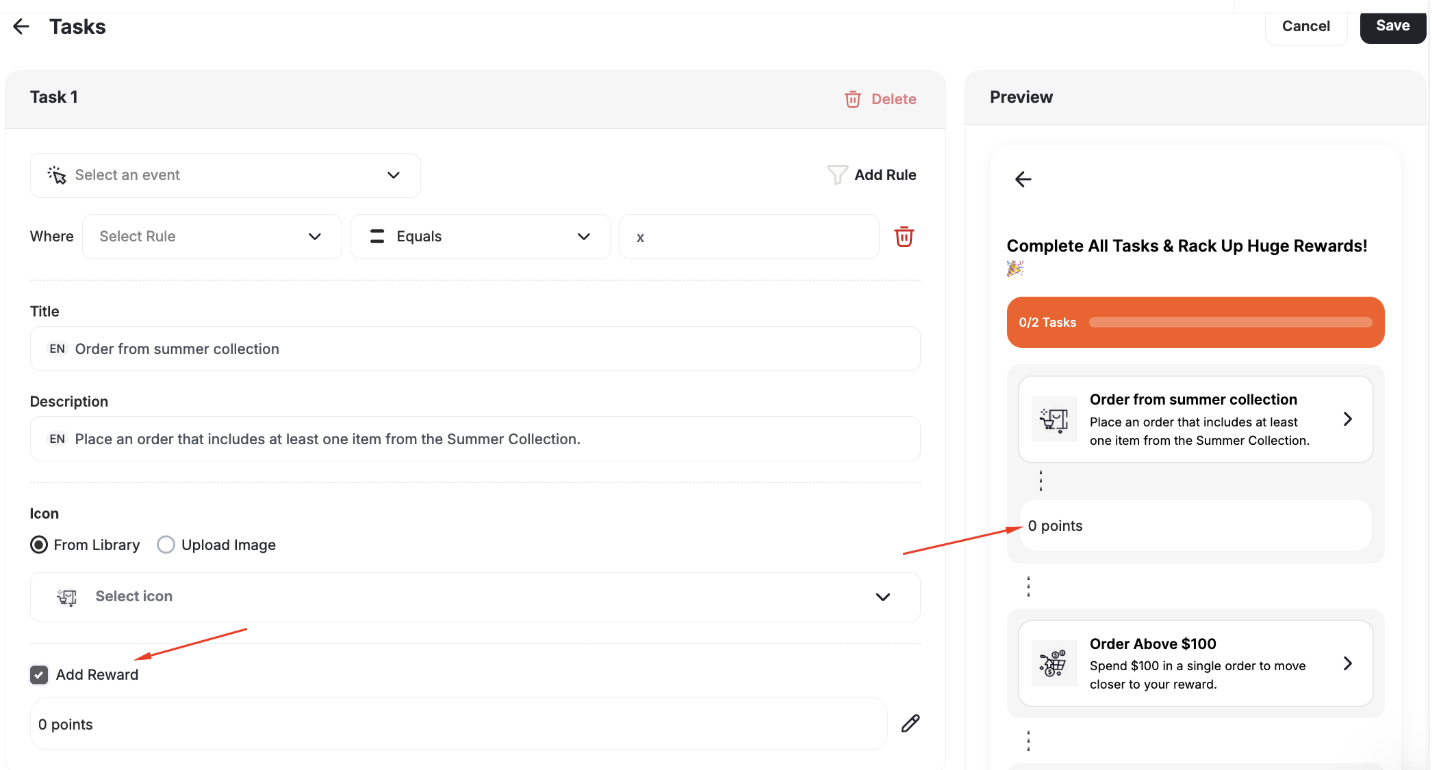
- How it works: Customers need to complete a set of actions, either in sequence or within a defined timeframe, to earn a reward. Actions can be diverse, such as completing a purchase, leaving a review, and visiting a specific page.
- Objective: To create engaging customer journeys that highlight different behaviors you want to promote.
- Best use cases:
- Multi-step onboarding journeys
- Seasonal campaigns with varied actions
- Gamified experiences with diverse challenges
- Example: You want to run a seasonal campaign for Black Friday. A customer earns a reward after completing these three actions:
- Add an item to the cart
- Make a purchase
- Share the offer on social media
Key Differences at a Glance
| Feature | Stamp | Milestone | Mission |
|---|---|---|---|
| Action requirement | Repeated action, Sequential | Repeated action, accumulated | Multiple different actions |
| Time dependency | Must be within a time frame | Flexible, no time dependency | Can include deadlines or sequences |
| Objective | Build habits and consistency | Motivate long-term achievements | Encourage varied engagement |
| Best for | Daily/weekly engagement | Long-term accumulation | Gamified customer journeys |
Important Notes
- Always align your campaign choice with the customer behavior you want to drive.
- Streaks are strict but highly effective for building habits.
- Milestones are easier to achieve since they don’t require consecutive actions.
- Missions are the most flexible and engaging but require more setup effort.
Common Questions
Can I run all three campaign types at once?
Can I run all three campaign types at once?
Yes, you can run multiple campaigns simultaneously, but make sure they don’t overlap or confuse your customers.
Which campaign type drives the most engagement?
Which campaign type drives the most engagement?
It depends on your objective. Streaks are best for daily engagement, milestones for long-term loyalty, and missions for immersive customer experiences.
Related Articles
How to Configure a Stamp Campaign
Set up a stamp campaign to reward customers for repeated consecutive actions.
How to Set Up a Milestone Campaign
Configure milestone campaigns that reward customers when they hit cumulative targets.
How to Create a Mission Campaign
Build multi-step mission campaigns that combine diverse customer actions into one journey.